Pea Protein vs Hemp Protein
A side-by-side look at two common plant-protein ingredients and why many powders combine them.
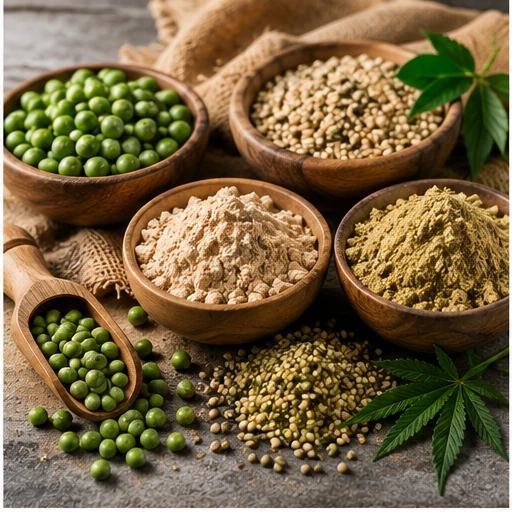
Plant Protein Path is independent. Some product links may earn us a commission at no extra cost to you. We do not claim to have personally tested products unless explicitly stated.
Pea protein powders are often more protein-dense because of how the ingredient is processed. Hemp protein products may retain more fiber and fat depending on processing.
What matters most
- Pea protein powders are often more protein-dense because of how the ingredient is processed.
- Hemp protein products may retain more fiber and fat depending on processing.
- Blending sources can change flavor, texture and amino-acid composition.
How to use this information
Protein-powder decisions are easier when you separate the basic nutrition question from the marketing. Start with your overall eating pattern, then decide whether a supplement solves a real convenience or dietary-fit problem. Once a powder is useful, compare the label rather than relying on front-of-pack superlatives.
- Compare labels rather than raw ingredients in isolation.
- For shakes, consider texture and taste alongside nutrition.
- For complete dietary protein, think about your full day's food pattern.
Label-reading checklist
| Check | Why it matters |
|---|---|
| Protein per serving | Lets you compare products on the nutrient you are primarily buying. |
| Serving size | Prevents misleading comparisons between unusually small or large scoops. |
| Protein sources | Helps with dietary preference, allergens, taste and amino-acid considerations. |
| Other ingredients | Shows sweeteners, flavors, gums, micronutrients and other additions. |
| Cost per serving | More useful than container price when pack sizes differ. |
Next: compare plant protein powders
Use a label-first buying guide before choosing a product.
See the buying guideHealth and nutrition context
Protein is an essential nutrient used throughout the body. Needs vary by age, health and activity level. Public-health sources also emphasize that protein can come from a range of plant and animal foods, and that a varied eating pattern matters. This site does not provide personalized medical nutrition advice.
References
- MedlinePlus: Dietary Proteins
- MedlinePlus: Protein in diet
- MedlinePlus: Amino acids
- U.S. Dietary Guidelines for Americans, 2025–2030
How this affects product choice
If you want a powder built around these two ingredients, check how much of each protein is actually present rather than assuming the front label implies an even blend. LiveGood combines organic pea and hemp protein, but its published lot-specific Certificate of Analysis shows a strongly pea-dominant formula.
LiveGood's broader strength is what surrounds that protein base: 20 g organic protein per serving, 26 vitamins and minerals stated by the manufacturer, and published testing documentation. Its current listed price is $39.95 for members and $49.95 retail. That can make it attractive to someone who wants a fortified plant-protein formula, but shoppers seeking a hemp-dominant powder should compare other products.
Product details and prices checked August 2026. Prices and formulas can change.