Best Organic Plant-Based Protein Powders
This guide covers plant-based protein powders sold as organic: what each one is best for, what the organic label does and does not prove, and how to check a certification yourself before you buy.
Disclosure: We earn a commission if you buy LiveGood through our links, at no extra cost to you. We do not earn from the other brands listed. Based on manufacturer labels and product pages. Not personally tested.
There is no single best organic plant protein. Pick by job: LiveGood if you want added vitamins and minerals, Orgain Natural Unsweetened for a neutral everyday powder, Garden of Life SPORT if you need a sport certification, and Truvani for a short ingredient list and more flavors. Whichever you choose, confirm the organic certification on the current label.
This page covers plant-based powders only. If you are weighing up whey as well, start with plant protein vs whey.
Four organic plant protein powders compared
| Product | Protein per serving | Main protein source | Organic claim (as listed by brand) | Notable | Best for |
|---|---|---|---|---|---|
| LiveGood Complete Plant-Based Protein | 20 g | Organic pea, small amount of hemp | USDA Organic seal on pack; certifier not named on product page | 26 added vitamins and minerals; stevia; published batch COA | Protein plus broad fortification |
| Orgain Organic Protein, Natural Unsweetened | 21 g | Plant protein blend | Marketed as USDA Organic | No added sweetness; made without soy or dairy ingredients | Smoothies, recipes and baking |
| Garden of Life SPORT Organic Plant-Based Protein | 30 g | Organic plant protein blend | Marketed as organic | NSF Certified for Sport | Athletes who need a sport certification |
| Truvani Plant Based Protein | 20 g | Organic pea protein | Marketed as USDA Organic | Short ingredient lists, several flavors | Ingredient simplicity and flavor choice |
Protein amounts and claims from each brand's product page. Prices change often, so we link to current pages rather than quote them here.
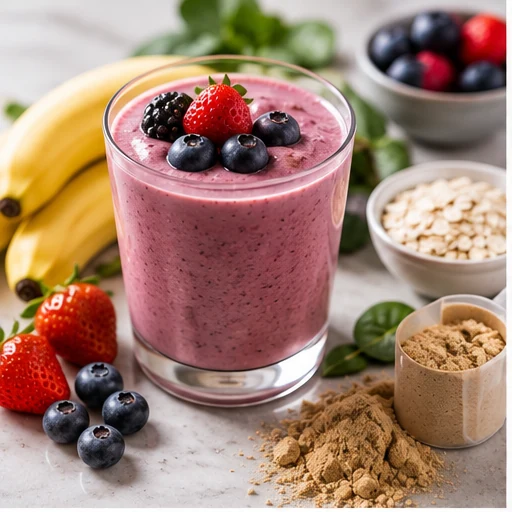
Choose by priority
If you want a fortified formula
LiveGood is the clearest fit. Its label lists 20 g protein, 0 g sugar and 26 added vitamins and minerals per scoop. That is useful if you want the fortification, and unnecessary if you only want protein.
If you want a simple base powder
Orgain Natural Unsweetened works more like an ingredient: 21 g plant protein, no added sweetness and a neutral profile for recipes as well as shakes.
If sport certification matters
Garden of Life SPORT stands out for NSF Certified for Sport and a 30 g protein serving. That is a different buying decision from choosing an everyday smoothie powder.
If flavor choice matters
Truvani offers several flavors and markets its plant protein around short ingredient lists. That can matter more than fortification if you want a straightforward flavored powder.
What "organic" tells you, and what it does not
In the US, a USDA Organic claim means the ingredients were produced and handled under the National Organic Program's rules, and the product was certified by an accredited certifying agent. It is a standard about how ingredients are grown and processed.
It does not tell you which powder has the most protein, the simplest formula, the best taste, the lowest price or the best allergen fit. It also does not mean a product has been tested for contaminants. That is why an organic shortlist still needs a second filter: what job do you want the powder to do?
If organic is not essential for you, our wider guide covers plant protein powders without the organic filter.
Organic vs "natural" protein powder
"Natural" and "all natural" are marketing words. Unlike "organic", they are not backed by a certification, so two "natural" powders can be made in very different ways. If organic production matters to you, look for a certified organic claim and check it, rather than relying on "natural" on the front of the pack.
How to check an organic claim yourself
- Look for the USDA Organic seal or the words "certified organic by" followed by a certifier's name on the current label.
- Search the brand or manufacturer in the USDA Organic Integrity Database, which lists certified operations.
- Note the difference between "organic" (at least 95% organic ingredients) and "made with organic ingredients" (at least 70%).
- Check the exact flavor and size you plan to buy, because formulas can differ across a range.
Testing and heavy metals
Many shoppers search for the "cleanest" organic protein powder. Organic certification does not cover heavy-metal testing. Plant ingredients can take up trace minerals from soil, so testing is a separate question to ask.
The most useful evidence is a published test report, such as a Certificate of Analysis (COA) for a specific batch, or a third-party certification like NSF Certified for Sport. LiveGood publishes a batch COA, and Garden of Life SPORT carries NSF Certified for Sport. A product without either is not necessarily a problem, but you have less to go on. A COA covers one batch, so check that it is recent.
Where LiveGood fits in the organic category
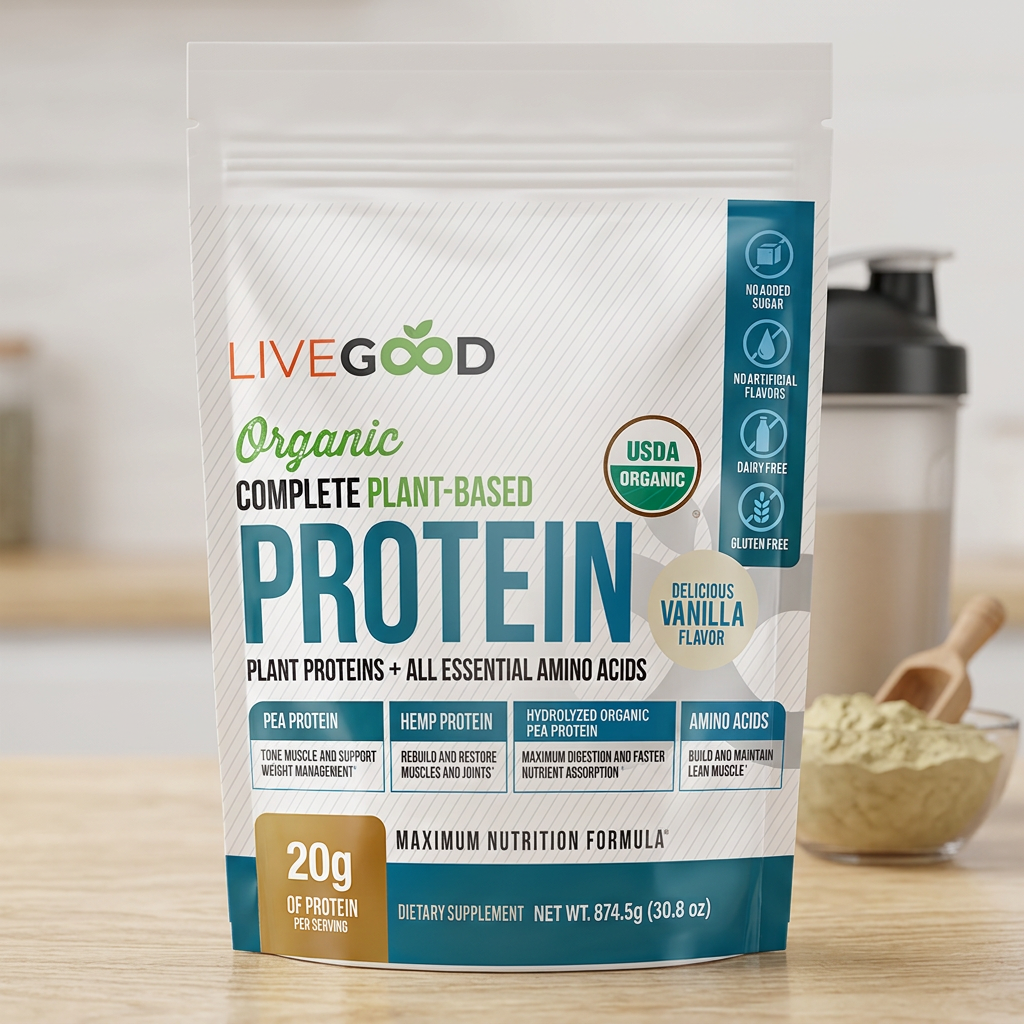
LiveGood Complete Plant-Based Protein
Read our detailed LiveGood protein review before buying. In short: 20 g protein, 0 g sugar and 26 added vitamins and minerals per scoop, with a published batch COA. $39.95 member or $49.95 retail when checked on 16 October 2026. Its strongest case is that combination, not a claim that it is best for everyone.
Check LiveGood price & availabilityA practical organic protein checklist
Use this list alongside our guide on how to choose a plant protein powder.
- Confirm the organic certification on the current package or manufacturer page.
- Compare protein grams and serving size together.
- Decide whether you want a minimalist powder or added vitamins and minerals.
- Check allergens, sweeteners and flavoring.
- Look for a published COA or third-party certification if testing matters to you.
- Compare current cost per serving after any subscription or membership terms.
Prefer a single protein source? See our shortlist of pea protein powders.
Frequently asked questions
What is the best organic plant-based protein powder?
It depends on what you need. For added vitamins and minerals, LiveGood. For a neutral unsweetened powder, Orgain Natural Unsweetened. For sport certification, Garden of Life SPORT. For a short ingredient list and flavor choice, Truvani.
Is organic protein powder better than non-organic?
Organic tells you how the ingredients were produced. It does not by itself make a powder higher in protein, better tasting or better tested. Compare the label and any testing documentation as well.
Does organic mean free of heavy metals?
No. Organic certification does not include heavy-metal testing. Look for a recent COA or a third-party certification instead.
Is "natural" protein powder the same as organic?
No. "Natural" is not a certified claim. "Organic" on a US product should be backed by a certifier you can look up.
Is LiveGood protein certified organic?
LiveGood's pack shows the USDA Organic seal and its label lists organic ingredients. The product page does not name the certifying agent, so check the current pack or ask LiveGood if you want to look it up in the USDA Organic Integrity Database.
Sources
- LiveGood: Complete Plant-Based Protein (checked 16 Oct 2026)
- Orgain: Organic Protein Natural Unsweetened
- Garden of Life SPORT Organic Plant-Based Protein
- Truvani: Plant Based Protein
- USDA Agricultural Marketing Service: Organic labeling
- USDA Organic Integrity Database
Updated 16 October 2026. Competitor product details were last reviewed in August 2026. Formulas, certifications, prices and availability can change.