Best Pea + Hemp Protein Powders: What to Look For
Pea + hemp is a useful category, but the blend name alone tells you very little about the actual formula. Here is how to compare products without assuming the ingredients are present in equal amounts.
Disclosure: Plant Protein Path is independent. Some product links may earn us a commission at no extra cost to you. We do not claim to have personally tested products unless explicitly stated.
Pea + hemp can be a useful blend, but the two ingredients are not necessarily present in equal amounts. Compare the actual formula, protein per serving, disclosed blend proportions, fiber/fat content, sweeteners and price rather than assuming every “pea + hemp” powder has the same balance.
Why combine pea and hemp?
Pea protein is commonly used as the main concentrated protein source in plant powders. Hemp can contribute additional plant protein along with some of the characteristics associated with a less-refined seed ingredient, depending on how it is processed. In a blend, the practical question is not whether both names appear on the label—it is how the finished formula is built.
Five things to compare in a pea + hemp powder
| Check | What it tells you |
|---|---|
| Total protein per serving | The amount of protein you are actually buying, independent of front-label language. |
| Blend order or disclosed proportions | Whether the formula is primarily pea with a small hemp addition or a more balanced blend. |
| Serving size | Useful context when two powders advertise similar protein grams from very different scoop sizes. |
| Other ingredients | Whether the powder is minimalist, heavily flavored, fiber-added or vitamin/mineral fortified. |
| Testing/certification | Relevant when you care about organic certification, sport certification or batch documentation. |
LiveGood as a pea + hemp example
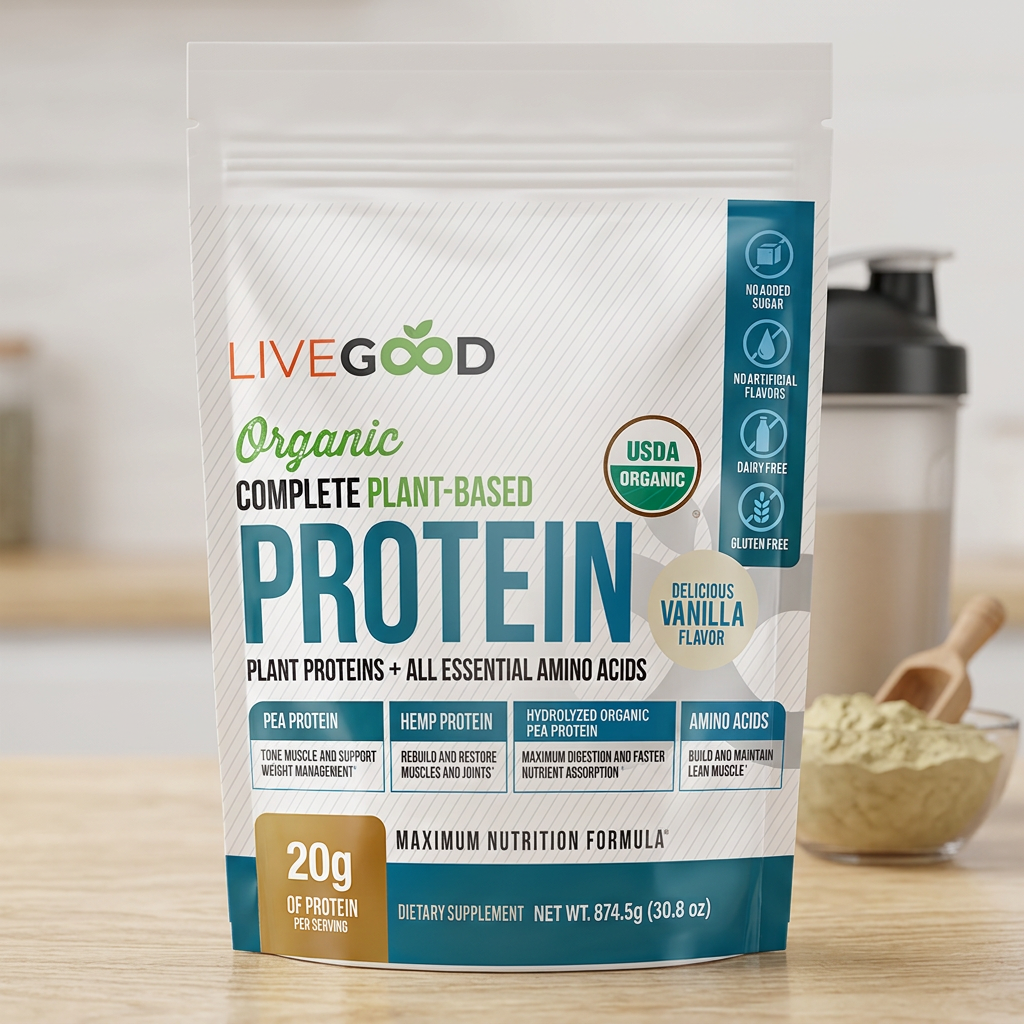
LiveGood Complete Plant-Based Protein
LiveGood markets the product around organic pea and hemp protein and currently states 20 g protein per serving plus 26 vitamins and minerals.
Check LiveGood PriceThe useful nuance is the published lot-specific Certificate of Analysis. In the available certificate, the formula is clearly pea-dominant by input, with hemp included at a much smaller amount. That does not make the blend “bad”; it simply means shoppers should not assume the package describes a 50/50-style pea/hemp formula.
If a meaningful hemp contribution is your priority, compare the actual label and any manufacturer documentation rather than choosing on blend naming alone.
When a pea + hemp blend makes sense
- You want a plant-based powder and prefer a multi-source formula to a single-source product.
- You like pea as the primary protein but want hemp included.
- You are comparing fortified and non-fortified formulas on their overall fit, not just protein source.
- You are comfortable checking ingredient order and documentation instead of assuming blend ratios.
When another formula may suit you better
A plain pea isolate may be a better choice if you want maximum simplicity. A hemp-forward powder may be more appropriate if hemp itself is your priority. A sport-certified multi-source powder can make more sense for tested athletes. And an unsweetened neutral powder may work better if you mainly bake or mix protein into food.
For the ingredient-level comparison, see pea protein vs hemp protein. For broader product choices, use the plant protein shortlist.
Sources
- LiveGood: Complete Plant-Based Protein
- LiveGood: Plant Protein Certificate of Analysis — lot-specific documentation.
- MedlinePlus: Dietary Proteins — general protein context.
Product details and available lot documentation reviewed August 2026.